
The 13 Akhadas of Kumbh Mela: Shaiva vs Vaishnava
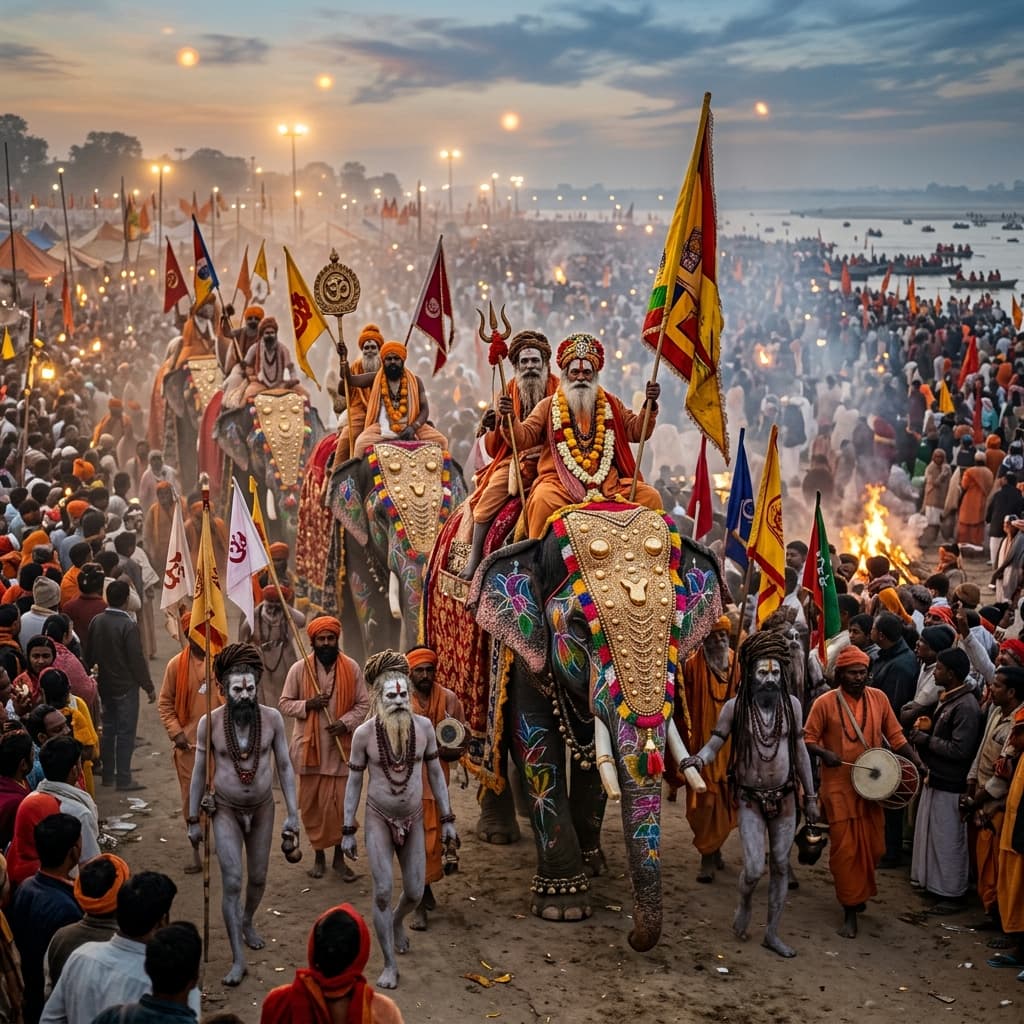
The 13 Akhadas are ancient orders of warrior monks. During the Nashik Kumbh, they are strictly divided: the Shaiva Akhadas (worshippers of Shiva) bathe at Trimbakeshwar, while the Vaishnava Akhadas (worshippers of Vishnu) bathe at Ramkund in Nashik.
The absolute heart and soul of the Kumbh Mela is the arrival of the Akhadas. Without them, the Mela is just a massive gathering. Understanding who they are, why they carry weapons, and how they operate is essential to grasping the magnitude of the festival.
What is an Akhada?
In the 8th century, the great philosopher Adi Shankaracharya organized Hindu ascetics into armed monastic orders called "Akhadas" (which literally translates to "wrestling rings" or martial camps). Their purpose was to physically protect the Sanatan Dharma and its temples from foreign invasions.
Today, they no longer fight wars, but they retain their ancient, fierce military structure. They have a strict hierarchy, led by a Mahamandaleshwar (Supreme Commander), followed by Mahants, and then the Naga Sadhus (the foot soldiers).
The 13 Recognized Akhadas
There are exactly 13 officially recognized Akhadas by the All India Akhada Parishad. They are broadly divided by the deity they worship:
- Shaiva Akhadas (7 orders): The largest and most famous is the Juna Akhada. They worship Lord Shiva. The Naga Sadhus of these sects cover their bodies in ash, wear no clothes, and carry tridents (Trishuls).
- Vaishnava Akhadas (3 orders): Also known as Bairagis. They worship Lord Rama/Vishnu. They wear white or yellow clothes, carry bows or swords, and mark their foreheads with vertical lines.
- Udasin and Sikh Akhadas (3 orders): Founded by the son of Guru Nanak, they bridge Hindu and early Sikh ascetic traditions.
The Nashik Split (A Bloody History)
Unlike Prayagraj where everyone bathes at the Sangam, Nashik is unique. In 1790, a massive, violent battle broke out at Ramkund between the Shaiva and Vaishnava ascetics over who had the right to bathe first. Thousands died.
To establish peace, the Peshwa rulers of the Maratha Empire mediated a permanent treaty. It was decreed that the Shaiva Akhadas would relocate their Shahi Snan to Kushavarta in Trimbakeshwar (since it houses the Shiva Jyotirlinga), and the Vaishnava Akhadas would retain Ramkund in Nashik (since Lord Rama lived there). This historic treaty is strictly enforced to this day!
The Peshwai Procession
The grand entry of the Akhadas into the city is called the Peshwai. It is a spectacle of massive proportions. The Mahamandaleshwars arrive on silver thrones mounted on elephants, followed by thousands of Naga Babas performing breathtaking feats of Hath Yoga, sword fighting, and chanting. This occurs a few days before the flag hoisting.
Frequently Asked Questions
What is a Naga Sadhu?
A Naga Sadhu is a fierce ascetic of a Shaiva Akhada who has renounced all worldly ties, including clothing. They smear their bodies in holy ash (Bhasma) and undergo extreme austerities.
Can tourists visit the Akhadas in Sadhugram?
Yes. The Akhadas set up massive camps in Tapovan. Pilgrims are allowed to walk through the camps, seek blessings, and witness their daily fire rituals (Dhunis).
Who bathes first on Shahi Snan?
By ancient tradition, the Naga Sadhus of the Mahanirvani and Juna Akhadas have the absolute right to take the first plunge into the water at the exact astrological minute. Normal pilgrims are not allowed near the water until the Sadhus finish.
Planning Your Trip?
Don't leave anything to chance. Download our massive 63-page Premium Ebook covering every aspect of the 2027 Nashik Kumbh Mela.
Get The Master Guidearrow_forward